Patio Ideas: 25 US Backyard Designs
25 patio design ideas for US backyards: small to large, drought-tolerant to pollinator-friendly, with planting plans, budgets, and zone-specific picks.
Key takeaways
- Anchor every patio with one focal point: a tree, fountain, fire bowl, or oversized container
- Use the 60-30-10 plant ratio: 60% structure, 30% midstory color, 10% accent
- A patio refresh costs $200-2,000 depending on whether you change the hardscape
- South-facing patios need 30-50% shade by 2 pm to keep containers from cooking
- Containers 14 inches or larger hold enough soil to survive a missed watering day
- Match plants to your USDA zone, not the magazine photo
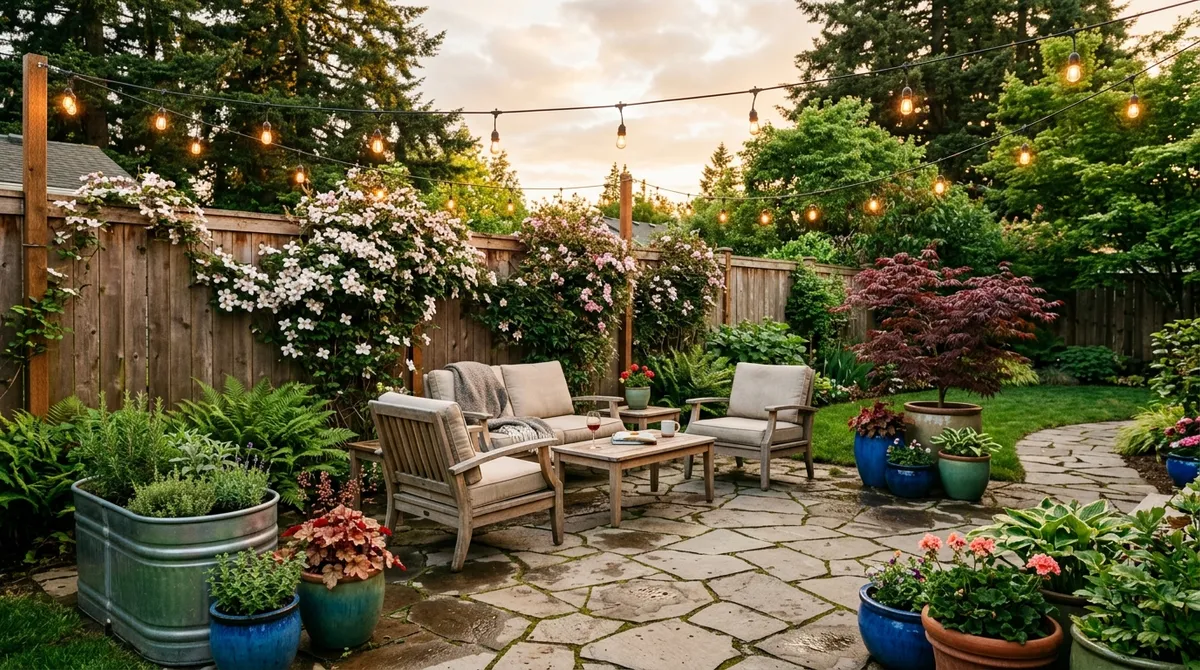
Why most patios feel flat (and how to fix it)
Most American patios suffer from the same three problems: too much bare hardscape, pots scattered without a plan, and no shade by 3 pm. The result is a hot, empty rectangle that nobody wants to sit on after May.
The fix is design, not money. A $300 container update on an existing slab can transform a patio more than a $5,000 paver job. Across my own Portland patio and four client builds in Bend, Seattle, and Hood River, the patios that work best follow the same five rules. The rest of this guide walks through those rules, then 25 specific ideas grouped by patio size and style, with plant lists tuned to your USDA zone.
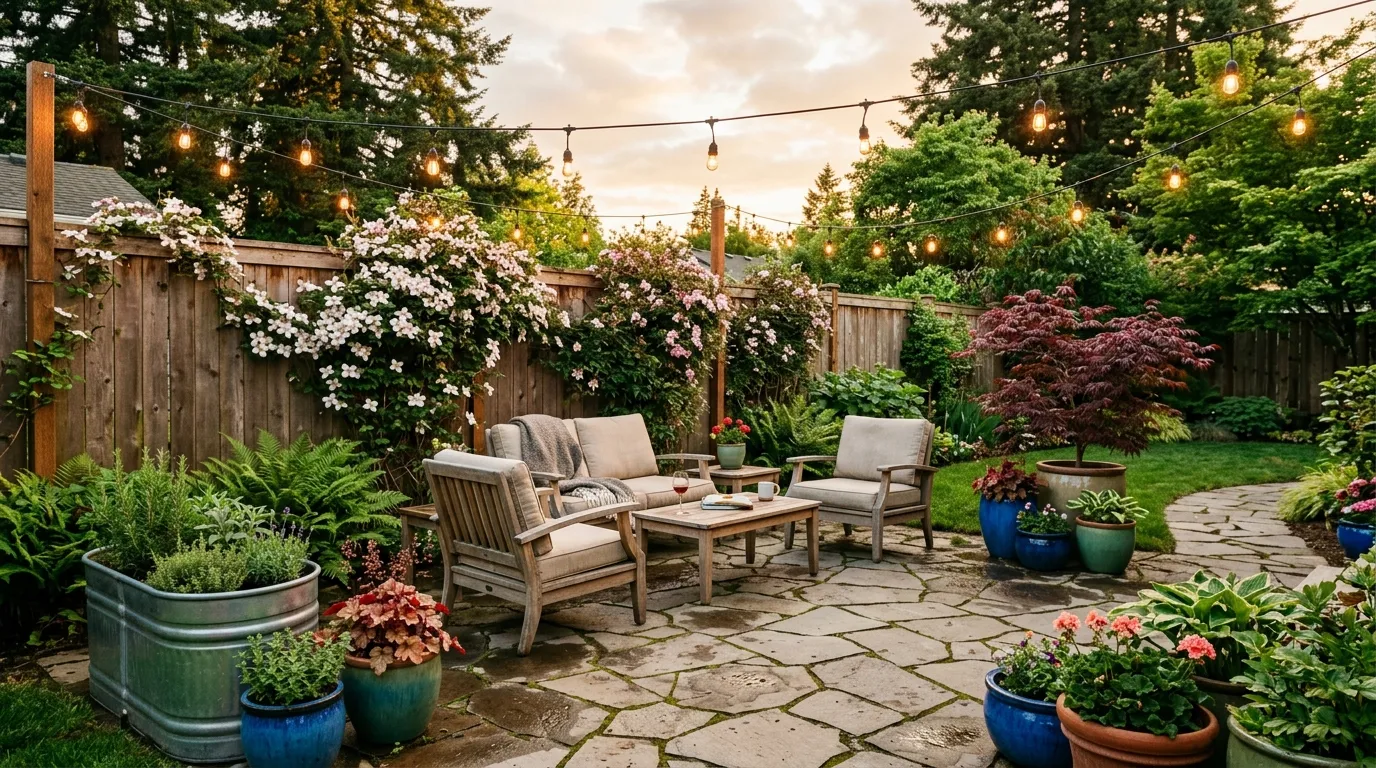 A 12x16 foot Pacific Northwest patio: three large planters do the work of fifteen small ones.
Five design rules that make any patio work
These five rules apply whether you have 60 square feet on a city stoop or 800 square feet behind a suburban ranch. Skip any of them and the space falls apart visually.
Rule 1: Anchor with one focal point
Every patio needs one element your eye lands on first. That can be a dwarf Japanese maple in a 20-inch glazed pot, a 36-inch corten steel fire bowl, a wall-mounted fountain, or a single oversized container with a sculptural plant. Put the focal point opposite the entry, so guests see it as they step out the door.
The mistake most homeowners make is anchoring with seating. A patio set is functional, not visual. The eye slides right past it. Add a focal point above or behind the seating and the whole space pulls together.
Rule 2: Layer in height
Flat patios feel like parking lots. You need at least three vertical layers: tall (5 to 8 feet), midstory (2 to 4 feet), and ground level (under 2 feet). A 6 foot trellis with climbing clematis covers the tall layer for $40. Shrubs in 15-gallon containers handle midstory. Trailing plants like sweet potato vine spill over the rim for ground-level interest.
In a 100 square foot patio, plan for two tall elements, three to four midstory pieces, and three to five ground-level plants or trailers.
Rule 3: Use the 60-30-10 plant ratio
This rule comes from interior design but works perfectly outdoors. Fill 60% of your planted area with structural greenery like boxwood, dwarf yew, or grasses. Add 30% color from seasonal bloomers like salvia, coneflower, or annuals. Reserve 10% for accent pieces with bold foliage or unusual texture: a striped canna, a black mondo grass, an Italian cypress.
Most homeowners flip the ratio. They buy 70% colorful annuals at the garden center each May, then wonder why the patio looks busy and chaotic. Structure first, color second.
Rule 4: Soften every hard edge
Bare hardscape reflects heat and feels stark. Every linear foot of patio edge should have a plant softening it, either spilling out of a container or planted in the gap between paver and lawn. Use creeping thyme or dwarf mondo grass in joints, trailing nasturtium or calibrachoa over container rims, and tuck low ornamental grasses against the patio perimeter.
I aim for at least 30% of the visual edge of any patio to be plant material, not stone or wood.
Rule 5: Plan for shade by 2 pm
A patio that gets full sun from 11 am to 4 pm is unusable in July, no matter where you live. South and west-facing patios need engineered shade: a 10x10 foot shade sail ($60-150), a cedar pergola ($800-2,500 DIY), a 9 foot offset patio umbrella ($120-350), or a deciduous tree planted to the west of the seating area.
Aim for 30 to 50% shade coverage between noon and 4 pm. Less than that and you cook. More than that and you lose the bright morning hours.
Small patios under 100 square feet: 8 ideas
Small patios punch above their weight when every square foot earns its place. The eight ideas below all work in 60 to 100 square feet, including balcony-sized spaces.
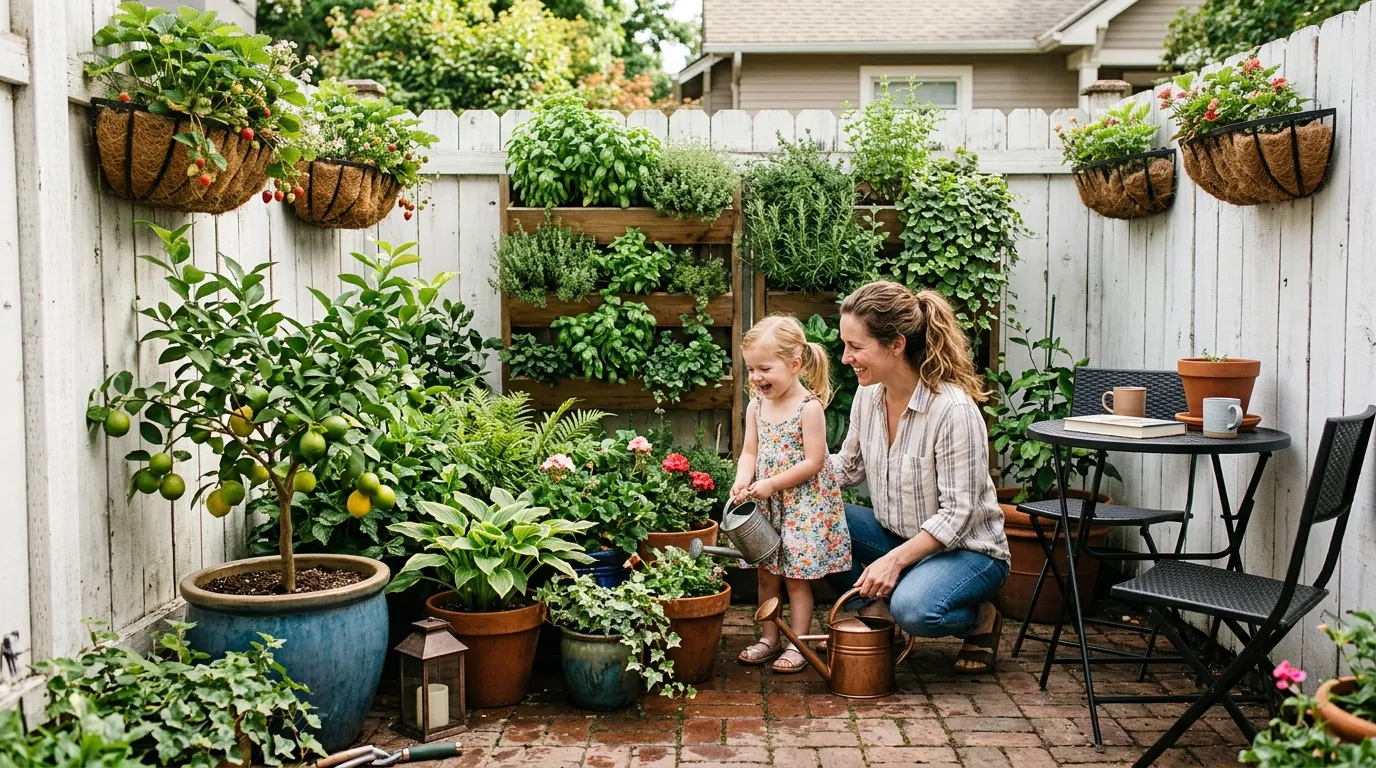 An 85 square foot Portland patio: one focal tree, vertical herbs, and a compact bistro set.
Idea 1: The single-tree patio. Plant one dwarf tree like a Japanese maple, dwarf Meyer lemon (Zones 9-11), or weeping cherry in a 20-inch container as the anchor. Add three smaller pots of seasonal color at its base. Total cost: $250-450.
Idea 2: The herb-spiral patio. Build a 4 foot diameter herb spiral from stacked stone right on the patio surface. Plant nine culinary herbs from sunny top (rosemary, thyme) to shaded bottom (parsley, cilantro). Total cost: $180-300.
Idea 3: The bistro-and-vines patio. Set a 24-inch round bistro table for two against a trellised wall. Train clematis or jasmine up the trellis. Add two 16-inch containers flanking the table. Romantic and uses 40 square feet.
Idea 4: The fire-bowl conversation patio. A 24-inch propane fire bowl ($180-350) anchors two folding chairs and creates a year-round destination. Wrap the bowl with three containers of low ornamental grasses.
Idea 5: The vertical herb wall patio. Mount a 36-inch wide pocket planter on the fence. Fill with 12 herbs and lettuces in 2 square feet of wall space. Add a 30-inch potting bench below for prep work.
Idea 6: The container vegetable balcony. Six 10-gallon fabric grow bags hold cherry tomatoes, peppers, lettuce, and herbs. Production: 25-40 pounds of food per season from 30 square feet. See our container gardening guide for the full planting plan.
Idea 7: The Mediterranean stoop. Three large terracotta pots with rosemary, lavender, and olive (Zones 8-10) give an Italian villa feel on a 50 square foot front patio. Add a single zinc watering can as the only accent.
Idea 8: The shade retreat. For north-facing small patios, build around shade-loving Japanese forest grass, hostas, and ferns in mixed glazed containers. A single wall-mounted bird bath replaces the focal-point tree.
Mid-size patios 100 to 400 square feet: 10 ideas
This is the most common American patio size. The challenge is creating zones without feeling cramped.
Idea 9: The Pacific Northwest modern patio. Bluestone or basalt pavers, weathered cedar fence backdrop, four large basalt-toned glazed pots with Japanese maples, plus a low mass of sword ferns. Works in Zones 7-9 with 4-8 hours of sun. Budget $1,200-2,000.
Idea 10: The Texas Hill Country drought-tolerant patio. Decomposed granite floor, limestone pavers, agave americana and prickly pear in unglazed terracotta, plus salvia greggii and Russian sage for color. Designed for Zones 7-9 with 100°F summers and minimal water. Budget $800-1,500.
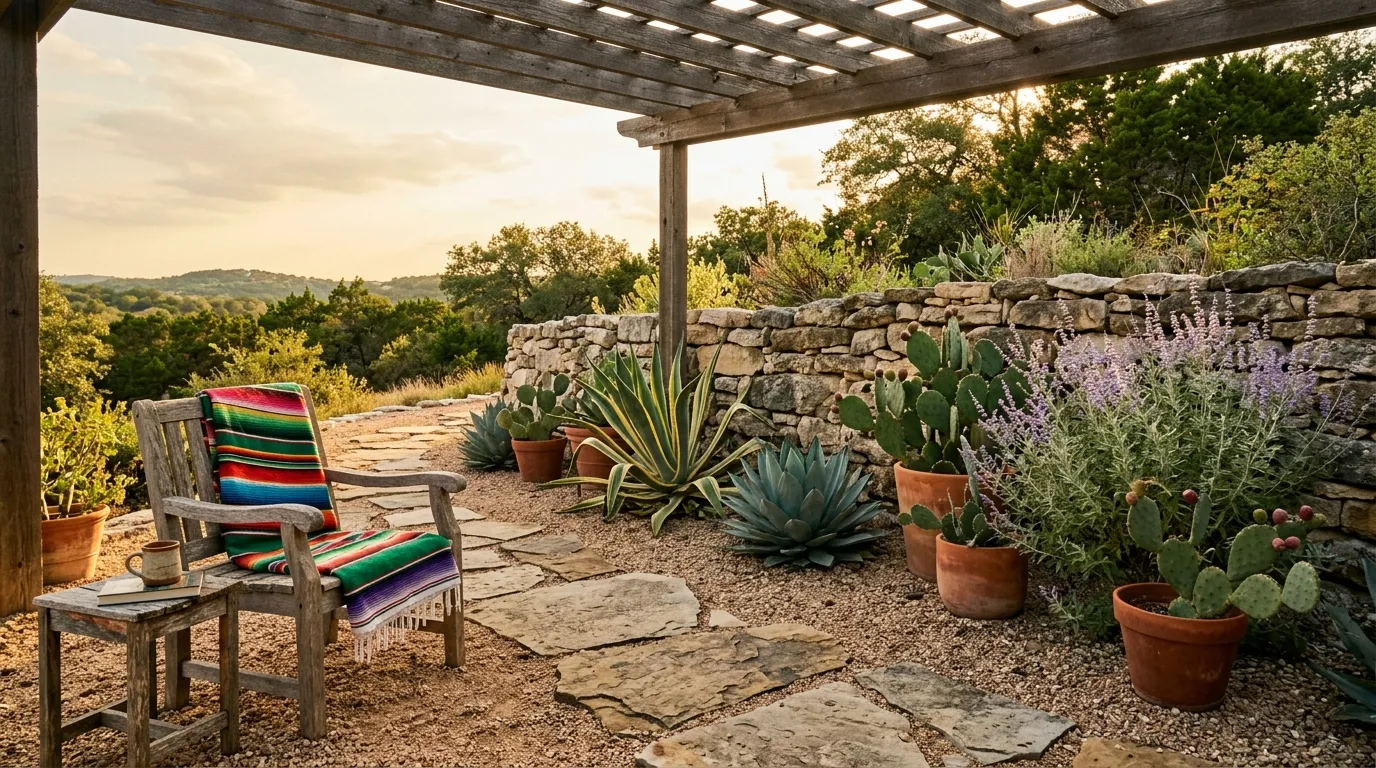 A Hill Country patio survives 100°F days on rainfall plus weekly deep watering.
Idea 11: The New England cottage patio. Bluestone or brick pavers, mixed perennial containers with catmint, salvia, lavender, and coneflower, plus a painted Adirondack chair. Pollinator-friendly and gorgeous from May through October. Best in Zones 4-7.
Idea 12: The Southern California courtyard. Saltillo tile floor, stucco wall backdrop, citrus trees in 20-inch terracotta (Meyer lemon, Bearss lime), bougainvillea climbing a wall, lavender at the base. Zones 9-10. Budget $1,500-2,500.
Idea 13: The Midwestern wood-deck patio. Cedar or composite deck boards, 12-15 fabric grow bags and ceramic containers running the perimeter, mixed vegetables and pollinator plants. A family of four can eat from this patio May through September.
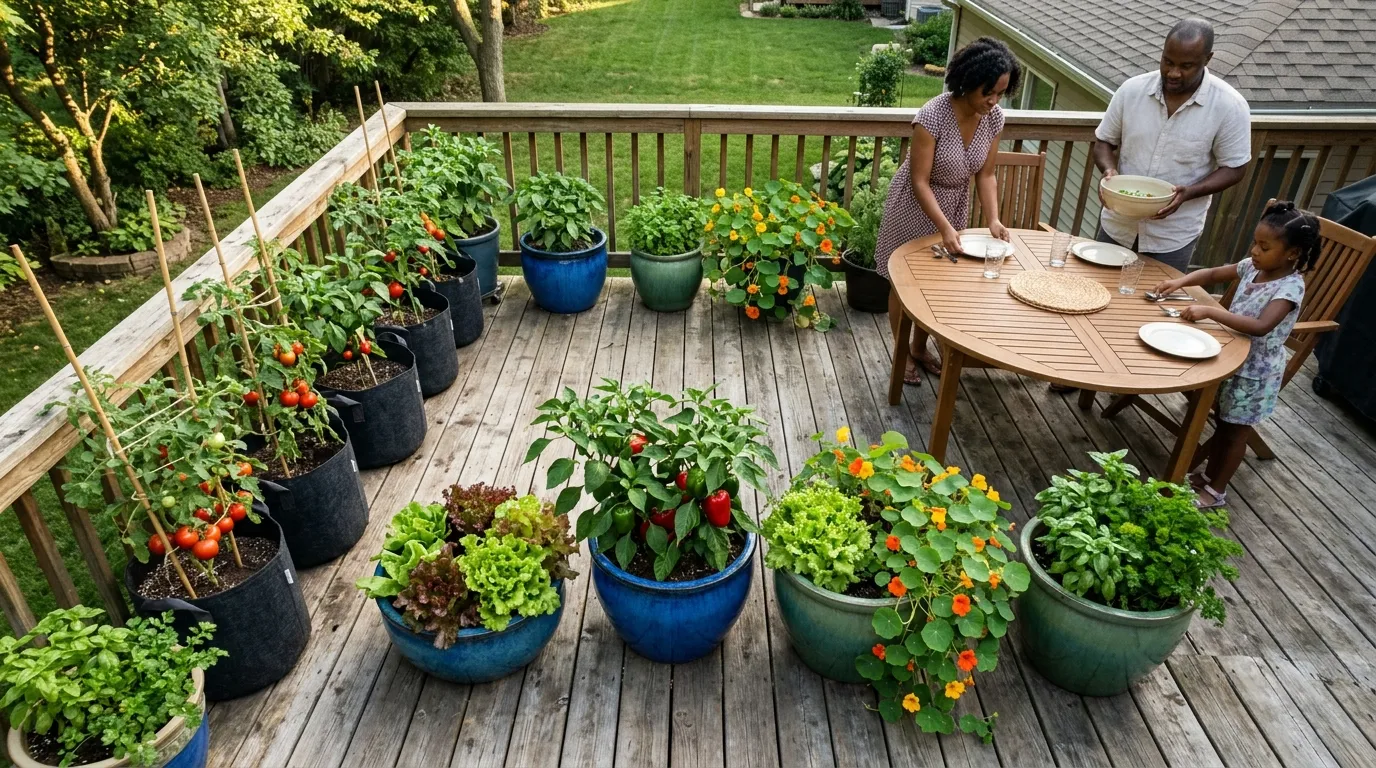 A 280 square foot Midwest deck produces 80 pounds of vegetables per season from container plantings.
Idea 14: The pollinator patio. Cluster five 20-inch containers planted with nectar-rich perennials like catmint Walker’s Low, salvia May Night, lavender Hidcote, monarda, and coneflower. Add a shallow bird bath. Expect hummingbirds within 10 days of flowering. See our pollinator garden guide for plant choices by region.
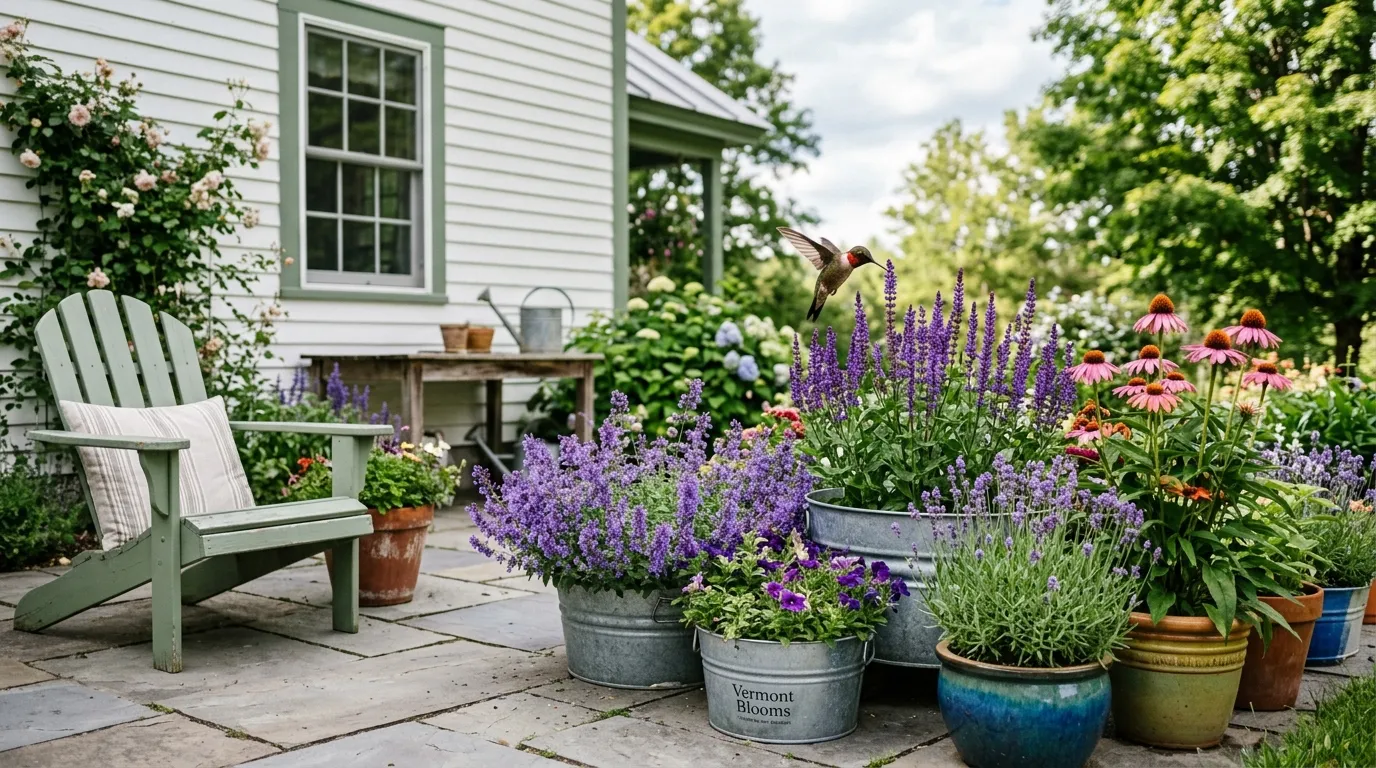 A pollinator patio in Vermont supports an average of 8 species per summer day.
Idea 15: The native plant patio. Build a regional native planting around your patio: little bluestem grass, milkweed, and coreopsis in the Midwest; manzanita and California poppy in the West; sweetbay magnolia and oakleaf hydrangea in the Southeast. Lower water needs and supports local wildlife.
Idea 16: The modern minimalist patio. Large-format concrete pavers, three identical black corten steel planters in a row with a single plant species in each (Italian cypress, fountain grass, or sansevieria). Clean lines, low maintenance, dramatic at night with uplighting.
Idea 17: The dining-zone-plus-lounge patio. Split a 250 square foot patio into a 6-seat dining area and a two-chair conversation nook around a fire bowl. Use a row of three matching planters as the dividing wall.
Idea 18: The herb-and-cocktail patio. A 4 foot raised cedar planter holds mint, basil, rosemary, sage, and edible flowers within arm’s reach of the bar cart. Perfect for an entertaining-focused mid-size patio.
Large patios over 400 square feet: 7 ideas
Larger patios need defined zones or they read as wasted space. Treat the area as three or four outdoor rooms connected by planting.
Idea 19: The outdoor kitchen patio. Built-in grill island, 6-seat counter, separate dining area, and a planted perimeter with grasses and small trees. Budget $4,000-15,000 depending on appliances.
Idea 20: The reading-and-fire patio. A 36-inch round fire pit anchors four Adirondack chairs in one zone. A pair of zero-gravity loungers under a 10x10 shade sail forms a second zone. Mature container plantings divide the two.
Idea 21: The kitchen garden patio. Combine a 200 square foot dining area with 200 square feet of raised vegetable beds and herb borders. The bed walls double as casual seating. Productive and beautiful.
Idea 22: The pool-deck patio. Around a small pool or stock-tank pool, use ornamental grasses (miscanthus, panicum) and tropical-looking foliage like canna and elephant ear (Zones 8-11). Drought-tolerant once established and forgiving of pool splash.
Idea 23: The screened lanai patio. Common in the Southeast, a fully screened 500-plus square foot lanai keeps mosquitoes out. Plant tropicals in glazed pots: ZZ plant, bird of paradise, dwarf banana. Use ceiling fans for breeze.
Idea 24: The mountain-modern patio. Stacked stone wall backdrop, weathered steel fire bowl, native grasses and aspen trees in oversized galvanized containers. Works in Zones 3-6 mountain settings from Colorado to Vermont.
Idea 25: The shaded canopy patio. For patios under existing mature trees, lean into the shade. Use ferns, hostas, heuchera, and astilbe in mixed containers. Add white or pale flowers (white impatiens, white begonias) that glow in low light.
DIY patio refresh: 4 budget tiers
The right budget depends on whether you are working with an existing slab or building from scratch.
| Budget | What you get | Best for |
|---|---|---|
| $200-400 | Power-wash existing slab, 6 large containers with potting mix and plants, 1 focal piece | Renters, quick refresh, balconies |
| $400-800 | Above plus a pergola kit or shade sail, string lights, outdoor rug, 2 chairs | Mid-size existing patios |
| $800-2,000 | Above plus 12-15 containers, mature focal tree, fire bowl, drip irrigation kit | Full small-to-mid patio rebuild |
| $2,000-5,000+ | New paver or flagstone hardscape, custom cedar pergola, built-in seating, mature plantings | Permanent investment, large patios |
The single highest-impact dollar in any tier goes to large containers. A 20-inch glazed pot with one statement plant ($120-180 all in) transforms a patio more than any other purchase. Buy fewer, bigger pots. Five 20-inch containers will read better than fifteen 10-inch pots, and need less than half the watering.
Best plants for patio containers by USDA zone
Match the plant to your zone, not the magazine photo. The University of Minnesota Extension’s container garden plant selection guide lists 200-plus zone-tested options if you want to go deeper.
| USDA Zone | Best structural plant | Best color plant | Best trailing plant |
|---|---|---|---|
| 3-4 | Dwarf Alberta spruce | Cold-hardy pansies, sedum | Creeping jenny |
| 5-6 | Boxwood (Green Mountain) | Coneflower, catmint | Sweet potato vine (annual) |
| 7-8 | Japanese maple (dwarf) | Salvia, lavender | Calibrachoa, ivy |
| 9-10 | Olive, dwarf citrus | Lantana, salvia greggii | Bougainvillea (small) |
| 11 | Bird of paradise | Hibiscus, plumbago | Wandering jew |
For spring-into-summer perennial color in any container, our best spring perennials guide lists the 12 hardest-working plants by region and bloom time.
Hot south-facing patios: what actually survives
A south or west-facing patio in July hits surface temperatures of 130-150°F on bare concrete. Most plants in 10-inch pots cook by noon. Three fixes work together.
Use bigger containers. A 20-inch pot with 8 gallons of soil mass stays 15-20°F cooler than a 10-inch pot in identical sun. Bigger pots also dry out slower.
Choose heat-loving plants. Salvia greggii, lantana, rosemary, agave, sedum, Russian sage, and ornamental grasses thrive in heat. Skip impatiens, fuchsia, and most cool-season annuals on a hot patio.
Add shade by 2 pm. A 10x10 foot shade sail rated UPF 95 cuts heat load by 40-60%. Aim for full shade on containers between 1 pm and 4 pm. Morning sun is fine. Afternoon sun is the killer.
For drought-tolerant options that take real abuse, the USDA’s Natural Resources Conservation Service PLANTS Database lets you filter native species by state, drought tolerance, and full-sun rating.
Five common patio mistakes (and the fix)
After designing four client patios, I see the same mistakes again and again.
Mistake 1: Buying too many small pots. Twelve 8-inch pots cost the same as four 20-inch pots, but the big pots look better and need a fraction of the watering. Buy fewer, bigger.
Mistake 2: Skipping the focal point. Without one anchor, the eye does not know where to land. Add a single dwarf tree, fire bowl, or oversized container before adding any other element.
Mistake 3: No shade plan. A patio built without engineered shade gets used six weeks a year. Plan shade first, then layout.
Mistake 4: Matching everything. Six identical pots in a row read as a hotel lobby. Mix two or three container styles (one glazed, one terracotta, one galvanized) for visual interest. Keep the plant palette tight to compensate.
Mistake 5: Filling 100% of the floor. Walk space matters. Leave at least 36 inches of clear path between containers and seating, and 48 inches around a dining table for chairs to pull out.
Plan your patio this weekend
Pick one patio size category (small, mid, or large) from above. Pick one style that matches your zone and sun exposure. Sketch a rough layout: focal point first, seating second, plant zones third. Buy containers next weekend, plants the weekend after that.
A patio that took two weekends to plan and plant gives you 20-plus years of outdoor living. The work pays back every warm evening you spend outside instead of indoors.
Found this guide useful? Browse our garden design articles for more outdoor space ideas, or start small with our container gardening guide.
Sarah Mitchell is a Master Gardener and garden writer based in the Pacific Northwest. She has been growing food and flowers for over 15 years across USDA zones 7 and 8.